Venice
Top attractions and things to do in Venice
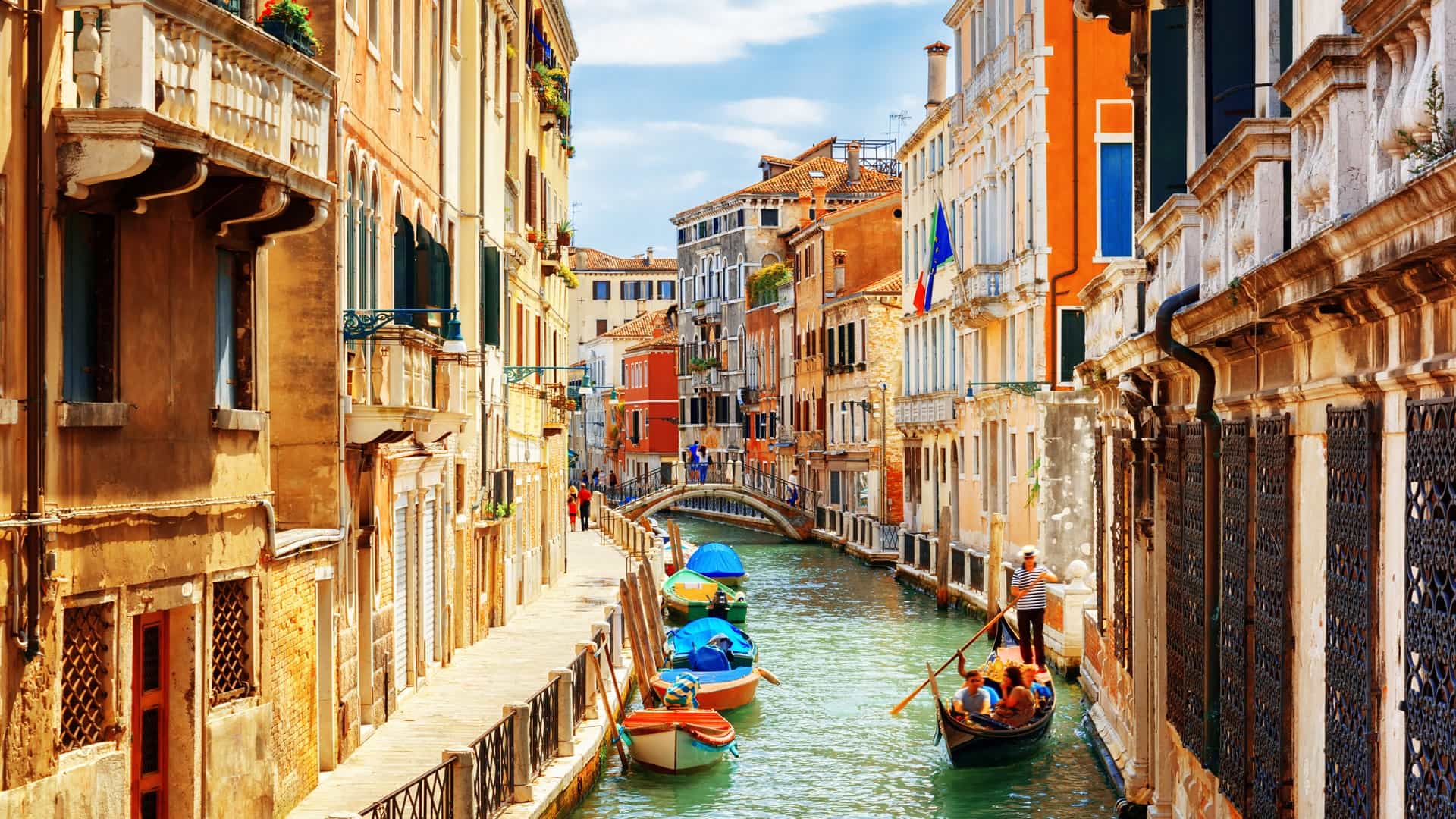
Venice is one of the world's truly extraordinary cities, built across 118 small islands in a shallow lagoon on the Adriatic coast of north-east Italy and connected by a network of over 150 canals and 400 bridges. There are no roads and no cars - the only way to move around the city is on foot or by water - and the result is an urban environment unlike anything else on earth. Known as La Serenissima (the Most Serene), Venice was for centuries one of the most powerful trading republics in the world, and the wealth accumulated during that era funded the extraordinary concentration of Byzantine, Gothic, and Renaissance architecture that survives largely intact today. The city is under constant threat from rising sea levels and overtourism, which makes visiting thoughtfully - arriving early, exploring beyond St. Mark's Square, and staying at least one night to experience the city after the day-trippers have gone - all the more worthwhile.
Grand Canal
The Grand Canal is the main artery of Venice, a broad S-shaped waterway roughly 3.8 kilometres long that winds through the heart of the city from the railway station at Santa Lucia to the basin of St. Mark's. Along its banks stand some of the finest palaces in Venice, built over five centuries by the city's merchant aristocracy as statements of wealth and civic pride - Gothic, Renaissance, and Baroque facades rising directly from the water, their lower floors stained by centuries of tidal movement. The best way to experience the Grand Canal for the first time is by vaporetto (water bus) on line 1, which stops at every landing stage along its full length and takes around 45 minutes from end to end. For a more intimate perspective, a traghetto - a gondola ferry that crosses the canal at several fixed points - costs a fraction of a private gondola ride and gives a brief taste of travelling by traditional craft. Three bridges span the canal: the Rialto Bridge, the Accademia Bridge, and the Scalzi Bridge near the station.
St. Mark's Square
Napoleon reportedly called the Piazza San Marco the finest drawing room in Europe, and it remains the undisputed heart of Venice. The square is flanked on three sides by the Procuratie, the long arcaded buildings that once housed the offices of the Venetian Republic's most senior officials, and opens at its eastern end onto the ornate facade of St. Mark's Basilica. The Campanile - the great bell tower that has been a landmark of the Venetian skyline since the 10th century - stands at the junction of the square and the smaller Piazzetta that leads down to the waterfront. The square is at its most atmospheric very early in the morning, before the crowds arrive, or in the evening when the orchestras of the historic cafes - Florian and Quadri, both open since the 18th century - play to the lingering visitors. High tides (acqua alta) regularly flood the square in autumn and winter, and seeing Venetians navigate the temporary raised walkboards is one of the more memorable experiences the city offers.
St. Mark's Basilica
The Basilica di San Marco is one of the greatest buildings in Europe - a vast Byzantine cathedral encrusted inside and out with golden mosaics, marble carvings, and treasures accumulated over nearly a thousand years of Venetian history. The current basilica was built in the 11th century to house the relics of St. Mark the Evangelist, which Venetian merchants had brought from Alexandria in 828, and its design was deliberately modelled on the great churches of Constantinople to project Venice's status as the heir to the Byzantine tradition. The interior is overwhelming: the ceiling is covered almost entirely in gold mosaic, the floors are inlaid with marble in complex geometric patterns, and the Pala d'Oro - a golden altarpiece studded with over 2,000 precious stones - stands behind the high altar. Entry to the basilica is free, though a charge applies for some areas including the treasury and the museum upstairs, where the original bronze horses (the ones on the exterior are replicas) are kept. Queues can be very long; pre-booking a timed entry ticket is strongly recommended.
Doge's Palace
The Palazzo Ducale was for centuries the seat of the Venetian Republic's government - the home of the Doge (the republic's elected head of state), the meeting rooms of its councils and magistracies, and the state prison. The building standing today dates largely from the 14th and 15th centuries and is one of the finest examples of Venetian Gothic architecture in existence, its distinctive pink and white marble facade and open arcaded ground floor giving it a lightness and elegance that belies the serious political business conducted inside. The interior is decorated on a lavish scale, with paintings by Tintoretto, Veronese, and other major figures of Venetian Renaissance art filling the walls and ceilings of the state rooms. The Sala del Maggior Consiglio, where the Great Council of Venice once met, contains Tintoretto's Paradise, one of the largest oil paintings in the world. The palace connects via the enclosed Bridge of Sighs to the state prisons, which can be visited as part of the standard ticket.
Rialto Bridge
The Rialto Bridge (Ponte di Rialto) is the oldest and most famous of the four bridges that cross the Grand Canal, and for several centuries - from its construction in stone in 1591 until the Accademia Bridge was built in 1854 - it was the only one. The bridge stands at the commercial heart of Venice, close to the historic Rialto market which has operated on this site since the early 12th century, and the stone arcade across its central span is lined with small shops selling jewellery, leather goods, and the inevitable souvenirs. The view from the top of the bridge, looking east along the Grand Canal towards the baroque church of San Bartolomeo, is one of the most photographed in Venice. Early morning is the best time to visit, when the market stalls on the nearby Campo della Pescaria are setting up and the canal traffic is at its most active.
Gondola Ride
The gondola is one of the defining images of Venice - a long, flat-bottomed wooden craft propelled by a single oar, steered by a gondolier in the traditional striped shirt and straw hat. Today gondolas are almost exclusively used by tourists rather than as everyday transport, but a gondola ride remains one of the most enjoyable ways to experience the quieter residential canals away from the main thoroughfares, passing under low bridges and alongside the back walls of palaces that are invisible from the street. Standard rates are set by the city and are the same regardless of which gondolier you use. A 30-minute ride accommodates up to six passengers, making it more affordable shared between a group. Prices are higher after 7pm. The smaller canals of the Dorsoduro, Cannaregio, and Castello districts offer a more intimate experience than the busier routes around St. Mark's.
Santa Maria della Salute
At the entrance to the Grand Canal, where it meets the broader Bacino di San Marco, stands one of Venice's most recognisable landmarks: the great Baroque church of Santa Maria della Salute. Built between 1631 and 1687 to a design by Baldassare Longhena, the church was commissioned by the Venetian Senate as a votive offering to the Virgin Mary in thanksgiving for the city's deliverance from a devastating outbreak of plague that killed a third of Venice's population in 1630. The church's extraordinary octagonal plan and its massive dome dominate the view of the Dorsoduro from the water. The interior is spacious and relatively austere compared to St. Mark's, with the main artistic treasures concentrated in the sacristy, which contains several major works by Titian and Tintoretto. The church is free to enter and is usually far less crowded than the attractions on the other side of the canal.
The Islands: Murano, Burano & Torcello
Venice sits within a broad lagoon dotted with islands, several of which are well worth including in a visit. Murano, a cluster of islands about 1.5 kilometres north of Venice, has been the centre of the Venetian glass-making industry since 1291, when the furnaces were moved there from the city to reduce the fire risk. The island has its own canal, its own glass museums, and working furnaces where visitors can watch master glassblowers at work - a far more interesting experience than the tourist shops on the main island. Burano, further to the north, is famous for its brightly painted fishermen's houses - the colours were traditionally used so that fishermen could identify their homes through the lagoon mist - and for its lace-making tradition. Torcello, the oldest settled island in the lagoon, is largely uninhabited today but contains the Cathedral of Santa Maria Assunta, with Byzantine mosaics dating to the 12th century that rank among the finest in Italy. All three islands are reached by vaporetto from the Fondamente Nove stop.