Florence
Top attractions and things to do in Florence
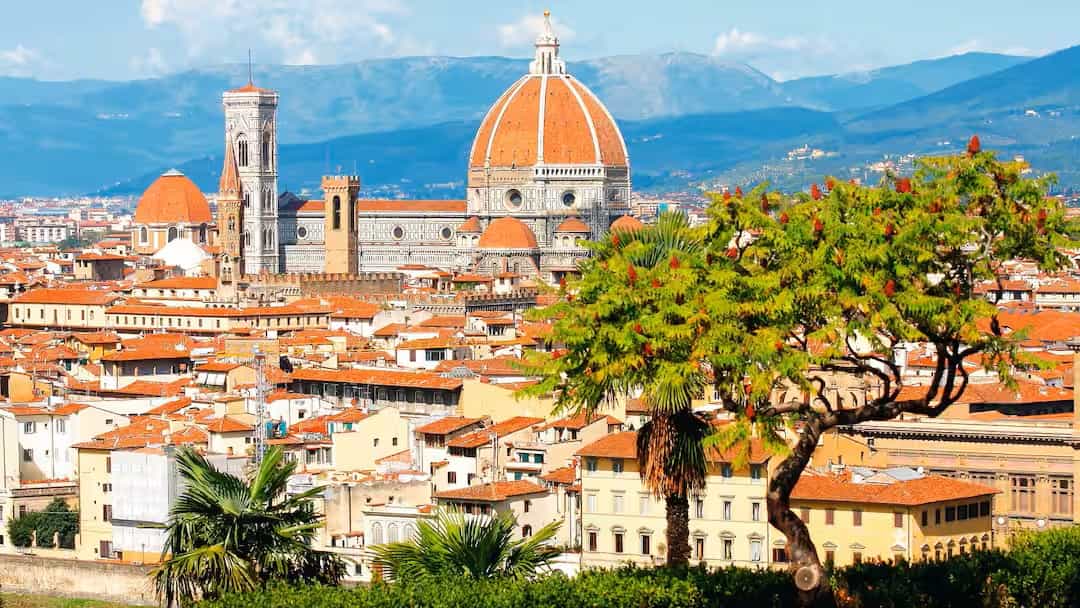
Florence is the capital of Tuscany and the city where the Renaissance was born, a compact historic centre on the banks of the Arno that contains one of the greatest concentrations of art and architecture anywhere in the world. In the 15th and 16th centuries, under the patronage of the Medici - the banking dynasty that effectively ruled the city for three hundred years - Florence became the intellectual and artistic capital of Europe, attracting painters, sculptors, architects, and thinkers whose work permanently changed the way the Western world understood beauty, humanity, and the possibilities of art. Botticelli, Leonardo da Vinci, Michelangelo, Brunelleschi, Ghiberti, and Donatello all worked here, and an extraordinary proportion of what they created is still here, in the museums, churches, and public spaces of a city that has changed remarkably little in outline since their time. The historic centre was designated a UNESCO World Heritage Site in 1982, and walking its streets for the first time - turning a corner to find the Duomo suddenly filling the sky, or crossing the Ponte Vecchio in the early morning before the crowds arrive - is an experience that few cities in the world can match.
The Duomo & Brunelleschi's Dome
The Cathedral of Santa Maria del Fiore, universally known as the Duomo, dominates the Florence skyline with the terracotta dome that Filippo Brunelleschi completed in 1436 - the largest brick dome ever constructed, a feat of engineering so ambitious that nobody had attempted anything like it for a thousand years and no one has successfully replicated it since. The cathedral itself, clad in white, green, and pink marble from Carrara, Prato, and Maremma respectively, was begun in 1296 and took over a century and a half to complete. The interior is surprisingly austere given the extravagance of the exterior - much of the original decoration was removed during a 16th-century renovation - but the experience of standing beneath the dome and looking up at Giorgio Vasari's frescoes of the Last Judgement, painted on the inner surface, is genuinely overwhelming. The climb to the top of the dome - 463 steps with no lift - passes through the double-shell structure Brunelleschi invented to solve the engineering problem of building at such a scale, with views out across Florence and the Tuscan hills from the lantern at the summit. Reservations are required and should be made well in advance, particularly in high season. The complex also includes the Campanile, the elegant marble bell tower designed by Giotto and completed in 1359, and the Baptistery of San Giovanni - the oldest building on the square, whose gilded bronze doors Michelangelo reportedly called the Gates of Paradise.
Uffizi Gallery
The Uffizi is one of the great art museums of the world, housing the Medici family's personal collection of painting and sculpture in a long U-shaped palace built by Giorgio Vasari in the 1560s and opened to the public in 1769. The collection covers the full arc of Italian and European painting from the medieval period to the 18th century, with a depth and quality in the early Italian and Renaissance sections that is simply unmatched anywhere else. The works that draw the largest crowds are Sandro Botticelli's Birth of Venus and Primavera, both painted in the 1480s and displayed together in a single room whose walls are otherwise hung with other Botticelli paintings - an embarrassment of riches that takes some time to absorb. But the Uffizi rewards exploration well beyond its most famous rooms: Leonardo da Vinci's Annunciation, Michelangelo's Doni Tondo, Raphael's portraits of Leo X and Julius II, Titian's Venus of Urbino, Caravaggio's Medusa, and rooms full of Flemish and Dutch masters are all here. Pre-booking is essential - queues without a reservation can stretch to several hours at peak times.
Galleria dell'Accademia
Florence's second great gallery is considerably smaller than the Uffizi but contains perhaps the single most famous sculpture in the world: Michelangelo's David, carved between 1501 and 1504 from a single block of Carrara marble and standing 5.17 metres tall. The statue was originally commissioned to stand outside the Palazzo Vecchio in the Piazza della Signoria, where a replica now stands; the original was moved to the Accademia in 1873 for protection and housed beneath a purpose-built dome that was designed specifically to display it. Seeing the David in person is a genuinely different experience from seeing it in photographs. The scale is unexpected - it is much larger than most people anticipate - and the quality of the carving, particularly the hands, the musculature, and the expression of focused intensity on the face, is more apparent than any reproduction can convey. The gallery also contains four of Michelangelo's unfinished Prisoners (or Slaves), which he was working on for the tomb of Pope Julius II, and which offer a fascinating insight into his working method. Again, advance booking is strongly recommended.
Ponte Vecchio
The Ponte Vecchio is the oldest surviving bridge in Florence and one of the most recognisable in the world, a medieval stone bridge spanning the narrowest point of the Arno that has been lined with shops built out over the water since the 13th century. The current bridge dates from 1345, replacing an earlier structure destroyed by a flood, and the shops that line both sides of its central corridor have been occupied by goldsmiths and jewellers since 1593, when Ferdinando I de' Medici expelled the butchers and fishmongers who previously traded there. Running above the shops on the eastern side of the bridge is the Vasari Corridor, a private elevated passageway built in 1565 so that the Medici could move between the Palazzo Vecchio and the Palazzo Pitti without descending to street level - a vivid reminder of the near-absolute power the family held over the city. The bridge was the only one in Florence spared by the retreating German army in August 1944, reportedly on the personal order of Hitler, though the buildings at each end were demolished to block passage. The best views of the bridge itself are from the Ponte Santa Trinita to the west, particularly at dusk when the lights come on.
Piazza della Signoria & Palazzo Vecchio
The Piazza della Signoria has been the political heart of Florence since the 14th century and remains the city's principal public square - a large L-shaped space dominated by the crenellated tower of the Palazzo Vecchio, which rises 94 metres above the surrounding rooftops and has housed the city's government in one form or another since it was completed in 1322. The square itself functions as an open-air sculpture museum, with a collection of Renaissance and Mannerist statues assembled under the Loggia dei Lanzi arcade on its southern side. The Palazzo Vecchio can be visited and contains a series of grand state rooms decorated in the 16th century under the direction of Giorgio Vasari for the Medici Duke Cosimo I, including the monumental Salone dei Cinquecento - a hall 54 metres long decorated with enormous battle paintings - and the intimate private apartments where the family lived. The tower offers another exceptional panoramic view over the city. The piazza in front is a natural gathering place at any hour and a particularly fine place to sit in the early evening as the light fades over the surrounding medieval streets.
Piazzale Michelangelo
High on a hill on the south bank of the Arno, about 20 minutes on foot from the city centre, the Piazzale Michelangelo offers the classic panoramic view of Florence - the view that appears on postcards, on the covers of guidebooks, and in the memory of almost everyone who has spent time in the city. From the broad terrace, the entire historic centre unfolds across the river: the Duomo and its dome at the centre, the tower of the Palazzo Vecchio to its left, the hills of Fiesole in the background, and the bridges of the Arno laid out in sequence below. The piazzale was created in 1869 by the architect Giuseppe Poggi as part of a major replanning of the city following Italian unification, and a bronze replica of Michelangelo's David - one of four that stand around the terrace - has occupied its centre ever since. The square is reliably busy at sunset, when visitors gather to watch the light fade over the city, but it is worth the crowds. Arriving in the early morning, when the mist over the Arno is still clearing and the square is nearly empty, is an even better option for those who are prepared to make the climb before breakfast.
Basilica di Santa Croce
The Basilica of Santa Croce is the principal Franciscan church of Florence and the largest Franciscan church in the world, a vast Gothic structure begun in 1294 whose interior serves in part as the pantheon of Italian genius. Michelangelo, Galileo Galilei, Niccolò Machiavelli, Lorenzo Ghiberti, and Leon Battista Alberti are all buried or memorialised here, and their tombs and monuments line the walls of the nave in a concentration of Italian history that has no parallel in the country. The church is also notable for its frescoed chapels, particularly those painted by Giotto and his workshop in the early 14th century, which represent some of the most important surviving examples of pre-Renaissance painting in Florence. The Bardi Chapel and Peruzzi Chapel frescoes by Giotto, depicting scenes from the lives of St. Francis and St. John the Baptist, influenced generations of later Florentine painters and are considered a crucial step in the development of naturalistic painting in the West. The museum attached to the church includes Cimabue's Crucifix, badly damaged in the 1966 Arno flood and painstakingly restored.
Boboli Gardens
Stretching up the hill behind the Palazzo Pitti on the south bank of the Arno, the Boboli Gardens are one of the earliest and most influential examples of Italian Renaissance garden design, laid out from 1550 onwards for the Medici family and extended significantly over the following two centuries. The gardens cover roughly 4.5 hectares and contain an extraordinary collection of fountains, grottoes, statues, and garden buildings accumulated over three hundred years of Medici patronage. The Buontalenti Grotto near the main entrance, encrusted with stalactites, shells, and sponge stone, is one of the most extraordinary pieces of Mannerist garden architecture in Europe. Further up the hill, the amphitheatre behind the palace - the first garden theatre in Europe - and the long cypress-lined avenues give the gardens a grandeur and formality that feels very different from the compact medieval streets of the city below. The gardens are best visited on a weekday morning before the heat of the day, and the views from the upper terraces across Florence to the Duomo are outstanding. Entry is included with the Palazzo Pitti ticket.