Edinburgh
Top attractions and things to do in Edinburgh
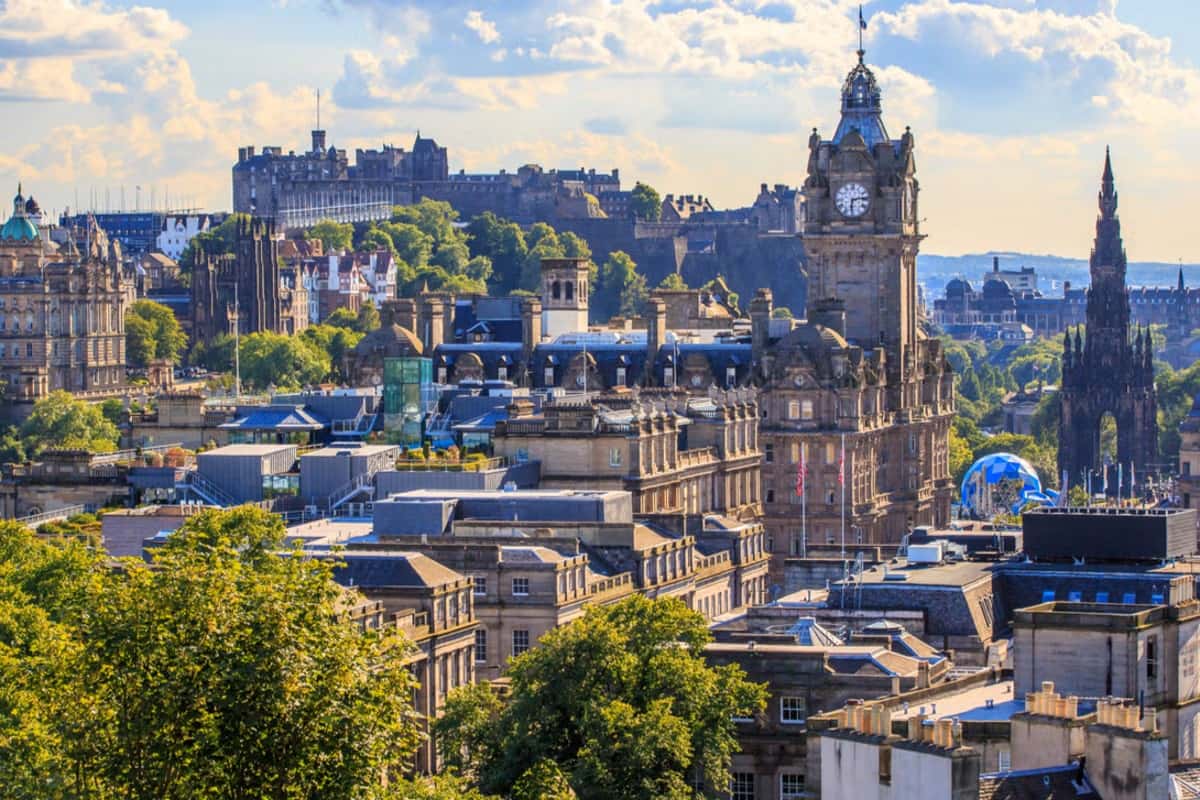
Edinburgh is Scotland's striking capital, a city built on volcanic rock and steeped in over a thousand years of history. The Old Town, with its towering tenements and narrow closes, climbs steeply from the Palace of Holyroodhouse up to Edinburgh Castle, forming one of Europe's most dramatic urban landscapes. Across Princes Street Gardens lies the Georgian elegance of New Town, a UNESCO World Heritage Site in its own right. With world-class museums, extraordinary natural scenery, and the famous Edinburgh Festival Fringe every August, the city rewards visitors at any time of year.
Edinburgh Castle
Few sights in Europe are as immediately commanding as Edinburgh Castle, perched high on the ancient volcanic plug of Castle Rock and visible from much of the city below. The fortress dates back to at least the 12th century, though the rock has been fortified since the Iron Age, and the complex that stands today is a layered mix of buildings added over many centuries of royal and military use. Inside the castle walls there is a great deal to explore. The Scottish Crown Jewels - the oldest set of crown jewels in the British Isles - are on permanent display, alongside the Stone of Destiny, on which Scottish monarchs were traditionally crowned. The National War Museum and the Royal Scots Dragoon Guards Museum both occupy the site, and the imposing Mons Meg, a 15th-century siege cannon, sits in the open air near St. Margaret's Chapel, the oldest building in Edinburgh. The views from the castle esplanade across the city rooftops and out towards the Firth of Forth are exceptional, and the One O'Clock Gun, fired every day except Sunday since 1861, remains one of Edinburgh's most enduring traditions.
The Royal Mile
Running from the esplanade of Edinburgh Castle down through the heart of the Old Town to the gates of the Palace of Holyroodhouse, the Royal Mile is the historic spine of Edinburgh. Despite the name, it covers approximately one Scottish mile, an old unit slightly longer than the standard mile, and passes through four distinct streets: Castlehill, Lawnmarket, High Street, and Canongate. Along the way, the closes and wynds that branch off on either side lead into a warren of courtyards and hidden spaces that reveal much about Edinburgh's medieval past. Notable stops include St. Giles' Cathedral, the high church of Edinburgh, the 17th-century Parliament House, and the Real Mary King's Close, a preserved series of underground streets that offer a vivid picture of life in the Old Town several centuries ago. The Royal Mile is also the stage for much of the Edinburgh Festival Fringe each August, when street performers, musicians, and artists from around the world fill the street from morning to well past midnight.
Palace of Holyroodhouse
At the foot of the Royal Mile, nestled against the dramatic crags of Salisbury Crags, stands the Palace of Holyroodhouse - the official Scottish residence of the British monarch. The palace has served in this role since the 16th century and continues to host royal functions, meaning some areas are closed to visitors during official use, so it is worth checking before you go. The history within these walls is remarkable. Mary, Queen of Scots lived here during the turbulent years of her reign, and her apartments have been preserved much as they were in her time, including the small supper room where she witnessed the murder of her Italian secretary, David Rizzio, in 1566. The ruined nave of the adjacent Holyrood Abbey, founded by King David I in 1128, stands in the palace grounds and is open to visitors. Though roofless since the 18th century, the remains are hauntingly beautiful, particularly on a clear afternoon when the light comes in low over the crags behind.
Arthur's Seat
Rising to 251 metres above sea level in the middle of Holyrood Park, Arthur's Seat is the remains of an ancient volcano that last erupted around 350 million years ago. It is one of the most unusual features of any European capital, providing a serious hillwalk just minutes from the city centre, with panoramic views that stretch on a clear day as far as the Highlands to the north and the Borders to the south. The walk to the summit takes roughly 45 minutes from the palace gates and is manageable for most reasonably fit visitors, though the upper section requires some care over loose rock. The reward at the top - an uninterrupted 360-degree view of the city, the Firth of Forth, and the surrounding countryside - is well worth the effort.
National Museum of Scotland
The National Museum of Scotland on Chambers Street brings together two of Edinburgh's great collecting institutions in a single building - the Victorian Royal Scottish Museum and the purpose-built modern wing opened in 1998. Together they house one of the most varied and absorbing collections in Britain, spanning Scottish history, natural history, science, technology, and world cultures. Highlights are genuinely eclectic. The Lewis Chessmen, medieval chess pieces carved from walrus ivory and discovered on the Isle of Lewis in 1831, are among the most famous objects in Scotland. Alongside them you will find a reconstruction of the Tomb of Perneb from ancient Egypt, exhibits on Scottish innovation from James Watt's steam engine to the invention of the telephone, and the preserved remains of Dolly the sheep, the world's first cloned mammal, born at the Roslin Institute near Edinburgh in 1996. Entry to the permanent collection is free.
Royal Yacht Britannia
Moored at the Ocean Terminal shopping centre in the Leith docklands, the Royal Yacht Britannia served as the official royal yacht of the British monarchy from her launch in 1953 until her decommissioning in 1997. In those 44 years she sailed over a million nautical miles and hosted countless state visits, official tours, and royal family holidays, carrying everyone from Winston Churchill to Nelson Mandela aboard. The self-guided audio tour takes visitors through five decks of the ship, from the State Apartments and royal dining room to the crew quarters, engine room, and the sun lounge where the Queen and the Duke of Edinburgh spent much of their leisure time. The level of detail retained on board - including the original fittings, furniture, and personal effects - makes for a surprisingly intimate experience. The yacht can be reached by a dedicated bus from the city centre.
Royal Botanic Garden Edinburgh
Founded in 1670 - making it one of the oldest botanic gardens in Britain - the Royal Botanic Garden Edinburgh sits on 28 hectares of landscaped grounds about a mile north of the city centre. The garden holds over 13,000 plant species from across the globe, and its temperate palm house, built in 1858, is one of the tallest of its kind in the world. Entry to the outdoor garden is free, making it one of Edinburgh's best-value attractions, while a modest charge applies to enter the glasshouse collection, which includes tropical, arid, and aquatic houses. The garden is particularly spectacular in spring, when the rhododendron borders around the Rock Garden are in full bloom.
St. Giles' Cathedral
The High Kirk of Edinburgh stands at the very heart of the Royal Mile and has been a place of Christian worship on this site since at least the 9th century. The current building dates largely from the 14th and 15th centuries, and its distinctive crown spire - modelled on the imperial crown worn by Scottish kings - has been a landmark of the Old Town skyline for over 500 years. Inside, the cathedral is rich with historical detail. The Thistle Chapel, added in 1911, is a small masterpiece of Scottish craftsmanship, with intricately carved oak stalls bearing the heraldic devices of the Knights of the Thistle, Scotland's highest order of chivalry. The cathedral continues to hold regular services and is free to enter, though donations are warmly welcomed.