Dublin
Top attractions and things to do in Dublin
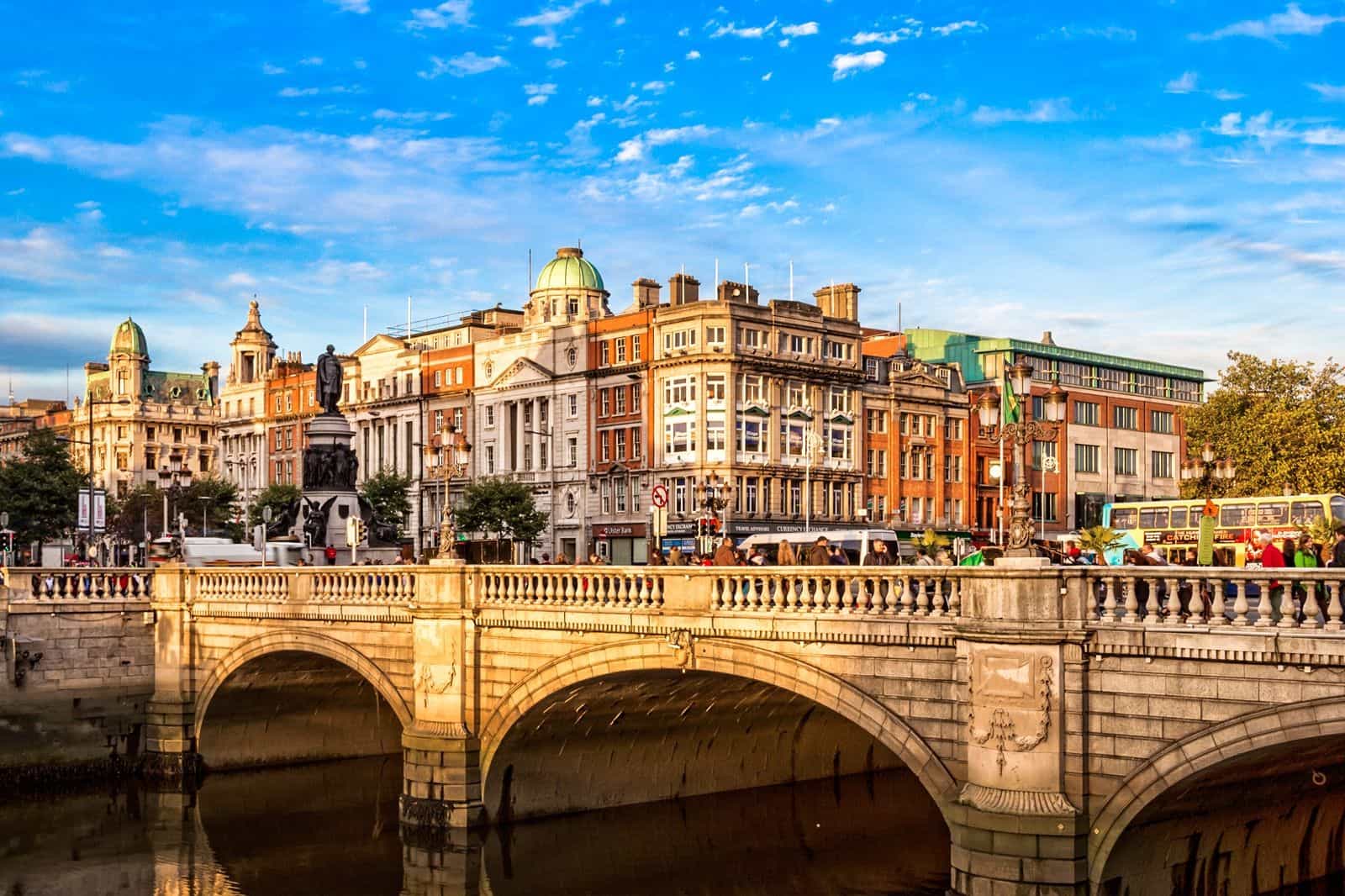
Dublin is the capital of Ireland and one of Europe's most immediately likeable cities - compact enough to explore largely on foot, richly layered with history, and possessed of a warmth and wit in its people that makes it an easy place to spend time in. The city sits at the mouth of the River Liffey on Ireland's east coast, and its character has been shaped by Viking settlers, Norman conquerors, centuries of English rule, and a long struggle for independence that left an indelible mark on its streets, its buildings, and its national psyche. It is also a city with an extraordinary literary tradition: Jonathan Swift, Oscar Wilde, James Joyce, Samuel Beckett, and W.B. Yeats all have their roots here, and the city wears that heritage with genuine pride. Add to this some of the finest pub culture in Europe, a thriving food and music scene, and a string of world-class museums and galleries, most of them free, and Dublin more than justifies a generous stay.
Guinness Storehouse
Ireland's most visited tourist attraction occupies a seven-storey Victorian cast-iron building at the heart of the St. James's Gate Brewery, where Guinness has been brewed continuously since Arthur Guinness signed his famous 9,000-year lease on the site in 1759. The self-guided tour leads visitors upward through the building's floors, each dedicated to a different aspect of the stout's history and production - ingredients, the brewing process, cooperage, advertising, and the global reach of the brand. The tour culminates at the Gravity Bar on the top floor, a circular glass-walled room with a 360-degree panorama of Dublin and a complimentary pint of Guinness included in the ticket price. The view and the pint together make for a memorable final flourish. The storehouse can be busy, particularly in the afternoon - booking tickets in advance and arriving early or late in the day is advisable.
Trinity College Dublin & the Book of Kells
Founded in 1592 by Queen Elizabeth I on the site of a dissolved Augustinian monastery, Trinity College is Ireland's oldest university and one of the most beautiful campuses in the British Isles. The cobbled Front Square, the 18th-century Palladian facade of the main building, and the Campanile bell tower - reputedly the spot beneath which, according to student legend, you are guaranteed to fail your exams if you stand when the bell rings - combine to make a remarkably handsome complex in the middle of a busy city. The college's principal visitor attraction is the Book of Kells, an illuminated manuscript Gospel book created by Celtic monks around 800 AD and widely considered one of the greatest surviving works of medieval art. The intricacy and imagination of the decorative pages - produced with quill pens, homemade inks, and extraordinary patience - are astonishing in person in a way that photographs cannot fully convey. The Book of Kells is displayed in the Old Library alongside the Long Room, a magnificent barrel-vaulted hall lined with 200,000 of Trinity's oldest books and one of the great library interiors in the world.
Kilmainham Gaol
Kilmainham Gaol is one of the most significant and sobering historical sites in Ireland, a former prison that held many of the leading figures of Irish revolutionary history from the 1798 rebellion through to the aftermath of the 1916 Easter Rising. It was here that the leaders of the Rising were executed by firing squad in May 1916, an act that turned public opinion decisively in favour of Irish independence and changed the course of the country's history. The gaol, which closed in 1924, has been preserved as a museum and is visited on a guided tour that covers the cell blocks, the execution yard where Patrick Pearse, James Connolly, and thirteen others were shot, and a detailed exhibition on Irish political and penal history. Pre-booking is essential as tours fill quickly - this is one attraction in Dublin where turning up on the day is rarely an option, particularly in summer.
Dublin Castle
For over seven centuries Dublin Castle was the seat of British rule in Ireland, the administrative heart of the colonial administration from its construction in 1204 until Irish independence in 1922. The complex that stands today is a mixture of medieval towers and 18th-century State Apartments built around a central courtyard, and its history is so deeply woven into the story of Ireland that it functions as much as a historical document as an architectural one. The State Apartments, used today for presidential inaugurations and official state functions, are open to visitors on guided tours and are sumptuously decorated in the style of the Georgian period. The medieval Record Tower, one of the few surviving elements of the original Norman castle, stands at the corner of the courtyard, and the Chapel Royal - a Gothick Revival gem completed in 1814 - is one of the finest decorative interiors in Dublin. The castle's underground excavations, which revealed the foundations of the original Viking fortress and a section of the old city wall, can also be visited.
St. Patrick's Cathedral
The National Cathedral of the Church of Ireland, St. Patrick's is the largest church in Ireland and one of its most historic. The current building dates from the late 12th and early 13th centuries, built on a site traditionally associated with St. Patrick himself, who according to legend baptised converts in a well near here during his 5th-century mission to Ireland. The cathedral has witnessed many of the most significant moments in Irish religious and civic life over the following eight centuries. Jonathan Swift, the author of Gulliver's Travels, served as Dean of St. Patrick's from 1713 until his death in 1745, and both he and his long-time companion Esther Johnson (known as Stella) are buried inside the cathedral. Swift's own memorial tablet and his death mask are on display near the entrance. The cathedral is also well known for its choral tradition, and attending a choral evensong is a rewarding experience in one of Dublin's most atmospheric spaces.
Christ Church Cathedral
The older of Dublin's two medieval cathedrals, Christ Church was founded around 1028 by Sitric Silkenbeard, the Norse King of Dublin, and rebuilt in stone by the Norman lord Strongbow following his conquest of the city in 1170. Strongbow's tomb, a recumbent effigy in the south aisle, is one of the cathedral's most visited features, though historians note that the figure probably dates from a later period and may not accurately represent him. The cathedral's most unusual attraction is its medieval crypt, the largest of its kind in Ireland and one of the oldest surviving structures in Dublin, stretching the full length of the building beneath the nave. The crypt houses an exhibition on the cathedral's history and contains some remarkable objects, including a mummified cat and rat - found locked together inside an organ pipe in the 1860s, apparently mid-chase - which have become improbably beloved fixtures of the visitor experience.
National Gallery of Ireland
Founded in 1854 and occupying a series of interconnected buildings on Merrion Square West, the National Gallery of Ireland holds the national collection of Irish and European art and is one of the finest free attractions in the city. The collection spans from the medieval period to the 20th century and includes significant works by Caravaggio, Vermeer, El Greco, and Rembrandt alongside a comprehensive holding of Irish painting from the 17th century onwards. The Irish collection is particularly strong, charting the development of painting in Ireland from the Georgian portrait tradition through 19th-century landscape and genre painting to the modernism of Jack B. Yeats, whose work fills a dedicated suite of rooms. A major renovation and expansion completed in 2017 significantly improved the building and the presentation of the collection, and the gallery now includes an excellent restaurant in the historic wing.
Phoenix Park
At roughly 707 hectares, Phoenix Park is one of the largest enclosed public parks in any European capital - larger than Hyde Park and Regent's Park in London combined - and an extraordinarily generous green space given its proximity to the city centre, just a short distance west of the quays. The park has been a public amenity since 1747, when it was opened to the citizens of Dublin by the Viceroy Lord Chesterfield, and it remains a working landscape with a distinctly unhurried, pastoral character that feels several worlds removed from the city on its doorstep. Within the park are the official residences of both the President of Ireland (Áras an Uachtaráin) and the United States Ambassador, Dublin Zoo, a herd of around 600 fallow deer that has lived in the park since the 17th century, and the People's Flower Gardens. The Phoenix Monument, a tall stone column topped by the mythological bird and erected in 1747, stands near the main Parkgate Street entrance and gives the park its name - a corruption, most likely, of the Irish Fionn Uisce, meaning clear water.