Bruges
Top attractions and things to do in Bruges
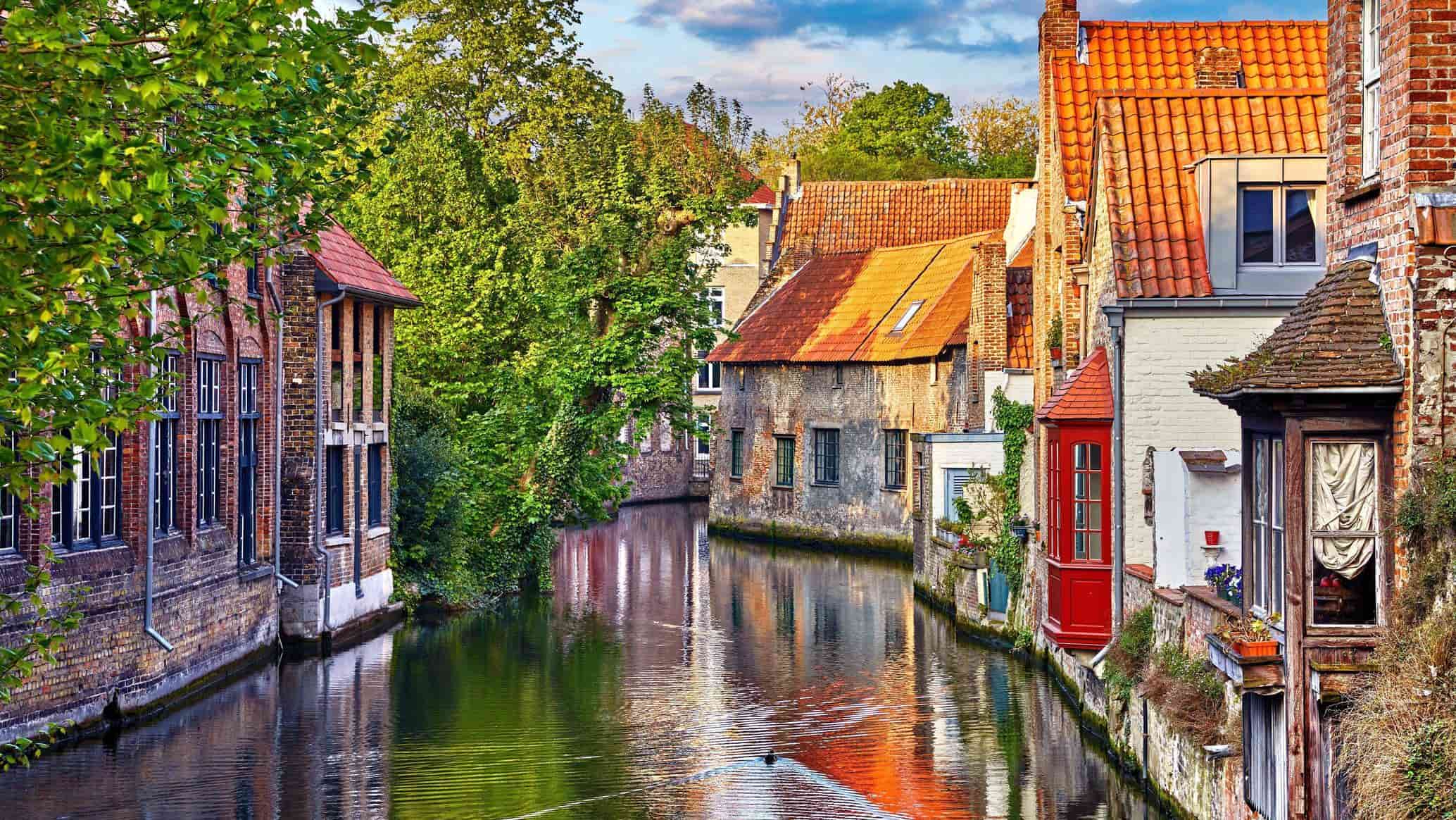
Bruges is one of the best-preserved medieval cities in Europe, a compact Flemish gem of cobbled streets, whitewashed almshouses, and Gothic spires reflected in a network of quiet canals that has earned it the well-worn nickname of the Venice of the North. The historic centre was designated a UNESCO World Heritage Site in 2000, a recognition of the extraordinary degree to which it has retained its medieval character - the result partly of Bruges' economic decline after the silting of the river Zwin in the late 15th century, which effectively froze the city in architectural amber for several centuries. That same decline also helped preserve its fabric from the more damaging phases of industrial development. Today Bruges is one of Belgium's most popular destinations, easily visited as a day trip from Brussels but more rewarding if you stay overnight, when the streets empty of coach parties and the city takes on a quieter, more genuinely atmospheric character.
The Markt
The Markt is the great central square of Bruges and the natural starting point for any exploration of the city. The square has served as the commercial and social heart of the city since the Middle Ages, and despite the inevitable tourist infrastructure that now surrounds it, its scale and the quality of the architecture lining its sides make it one of the finest market squares in Belgium. On the eastern side stand the Provincial Court and the Post Office, both neo-Gothic buildings from the 19th century whose style deliberately echoes the medieval buildings they replaced. In the centre of the square stands a 19th-century statue of Jan Breydel and Pieter de Coninck, the Flemish heroes of the Battle of the Golden Spurs in 1302, when a Flemish force defeated the cavalry of the King of France in one of the most significant early expressions of Flemish civic identity. Horse-drawn carriages depart from the square for tours of the city, and the cafes under the arcades on the western side are well placed for watching the comings and goings at the base of the Belfry.
The Belfry
Rising 83 metres above the southern end of the Markt, the Belfry (Belfort) of Bruges is the city's most immediately recognisable landmark - a medieval tower that has been keeping watch over the market square since the 13th century, its distinctive square profile and octagonal lantern visible from across the surrounding rooftops. The tower houses a carillon of 47 bells which plays at regular intervals throughout the day, the sound carrying clearly through the narrow streets below. Visitors can climb the 366 steps to the top for a panorama over the terracotta rooftops of the city, the canals, and the flat Flemish countryside stretching away to the horizon. The climb passes the treasury room, where the city's charters and seals were historically kept, and the carillon mechanism - a complex rotating drum fitted with metal pegs that trip the hammers of the individual bells - which can be seen in action at close quarters. The view from the top is among the finest in the city.
Canal Tour
No visit to Bruges is complete without at least one journey by boat along the city's canal network. The waterways that wind through the historic centre offer a perspective on the medieval architecture that is simply unavailable from the streets, revealing the backs of buildings, private gardens, and canal-side facades that most visitors never see on foot. Open boat tours depart from five landing stages around the city centre between March and November, running continuously throughout the day and lasting around 30 minutes. The boats are small and the commentary is delivered live by the boatman, making for a more personal experience than recorded-audio alternatives. Queues can be long in high summer - the Rozenhoedkaai landing stage, at the junction of two canals with a view back towards the Belfry, is one of the most photographed spots in Belgium and draws the largest crowds.
Basilica of the Holy Blood
Tucked into a corner of the Burg - the formal civic square just east of the Markt - the Basilica of the Holy Blood is a remarkable double chapel that houses one of the most venerated relics in Christendom. According to tradition, the relic - a fragment of cloth said to have been used to wipe the blood from the body of Christ after the Crucifixion - was brought to Bruges from the Holy Land by Count Thierry of Alsace following the Second Crusade in 1150. The basilica comprises two superimposed chapels. The lower chapel of St. Basil, dating from the 12th century, is one of the finest surviving examples of Romanesque architecture in Flanders - austere, low-vaulted, and built from the distinctive brown stone of the period. The upper chapel, reached by a broad flight of stairs, was rebuilt in the Gothic style in the 15th century and contains the relic itself, displayed in a rock crystal vial set in a gilded silver reliquary. The relic is brought out for veneration every Friday and on the feast of the Ascension, when it is carried through the city in the Procession of the Holy Blood - one of the oldest and most spectacular religious processions in Belgium.
Begijnhof
A short walk south of the Markt along the Dijver canal, the Begijnhof is one of the most tranquil and best-preserved beguinages in Belgium. Founded in 1245, it was established as a community for beguines - lay religious women who lived communally and devoted themselves to charitable and devotional work, but without taking permanent vows and without enclosing themselves entirely from the outside world. The beguines of Bruges were known particularly for their lace-making, a tradition that became closely associated with the city. The beguinage consists of a large whitewashed courtyard enclosed by a ring of small whitewashed houses and a church, entered through a gatehouse from the street outside. The sense of quiet upon entering is striking, especially given the busy tourist routes just a few minutes away. The beguines were gradually succeeded from 1937 by Benedictine sisters, who still occupy the complex today. Several of the houses are open to visitors, including one preserved as a museum of beguine domestic life, and the church is open throughout the day for quiet reflection.
Minnewater
At the southern edge of the old city, just beyond the Begijnhof, lies the Minnewater - a small, peaceful lake enclosed by weeping willows, ancient brick walls, and the occasional graceful swan, which has been the symbol of the city since the 15th century. The name translates loosely as Lake of Love, and a local legend holds that couples who kiss on the stone bridge at the lake's northern end are guaranteed lasting happiness together - a story that has made the Minnewater a popular destination for visitors with romantic intentions. The lake is the remnant of what was once the outer harbour of Bruges, where barges loaded and unloaded goods for the city. The lock house at the southern end of the lake, now a restaurant, dates from 1519 and is one of the older surviving buildings on the waterside. The area around the Minnewater is quiet and unhurried, making it a welcome respite from the busier streets around the Markt, and a pleasant place to end an afternoon in the city.
Groeninge Museum
The Groeninge Museum on the Dijver houses the city's principal collection of fine art and is one of the most important small museums in Belgium. The collection spans six centuries of Flemish and Belgian painting, from the early Flemish Primitives of the 15th century through the Renaissance, Baroque, and Neoclassical periods to the realists and expressionists of the 19th and 20th centuries. The early Flemish section is outstanding. Jan van Eyck, who lived in Bruges from 1430 until his death in 1441, is represented by two major works including the Madonna with Canon van der Paele - a painting of almost photographic precision that demonstrates why Van Eyck is considered one of the founding figures of northern European painting. Hugo van der Goes and Hans Memling, who worked in Bruges during the city's commercial golden age, are also well represented. The museum is modest in scale and can be seen thoroughly in two to three hours.
De Halve Maan Brewery
Founded in 1564, De Halve Maan (The Half Moon) is the only remaining family brewery operating within the historic centre of Bruges, and has been producing beer on the same site for nearly five centuries with just one interruption - during the First World War, when the two brothers who ran the brewery were both killed in action and their widows kept the business running alone until peace returned. The brewery is currently in its sixth generation of family ownership. Guided tours run throughout the day and take visitors through the brewing process from malt to finished beer, ending with a tasting on the rooftop terrace that offers excellent views across the city. The brewery's signature beer is Brugse Zot, a golden ale brewed to the original recipe, alongside Straffe Hendrik, a stronger tripel. In a bold piece of civic engineering, the brewery completed a 3.2-kilometre underground beer pipeline in 2016 to carry finished beer from the brewery in the city centre to its bottling plant on the outskirts - a solution that eliminated dozens of daily tanker deliveries through the narrow medieval streets.